Determining the Source of Lead
Before developing a mitigation plan, it’s important to understand how lead gets into drinking water. Source water from a water treatment plant rarely contains lead. However, lead can be released into water from corrosion (or wearing away) of plumbing material that contains lead. Sources of lead in water include lead service lines (the water line connecting your facility to the public water supply), galvanized metal pipes, brass or chrome-plated fixtures that contain lead, and lead solder used to connect copper piping.
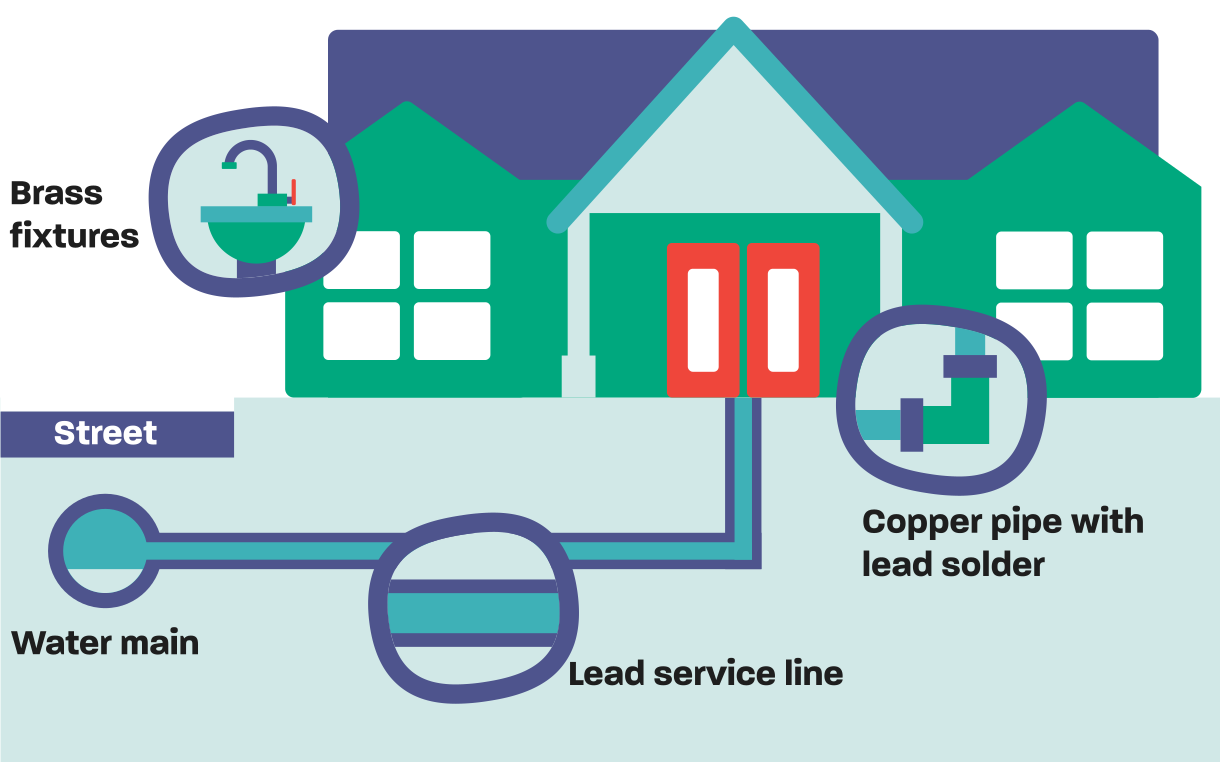
The first step in determining the source of lead at your facility is to investigate the presence of a lead service line, which is a lead pipe connecting the facility to the water main under the street. Where present, lead service lines are the greatest contributors to lead in drinking water. To determine if your service line is made of lead, contact your water utility, which may have records on this information. Another option is to conduct a visual inspection by checking the water service line where it enters the building, either on your own or with assistance from a licensed plumber. Check out NPR’s interactive web-based tool for guidance on visually inspecting for a lead service line.
The best way to identify if lead is present in your facility’s internal plumbing system is to test all drinking and cooking water sources. After investigating for a lead service line, review your lead-in-water test results.
- If your first draw sample tests positive for lead, there is likely lead in the fixture, such as a sink faucet or a drinking fountain. Focus on mitigation strategies that address the fixture directly.
- If your 30-second flush sample tests positive for lead, the lead is likely coming from a source further upstream in the internal plumbing system. Focus on mitigation strategies that address plumbing.
- If both your first draw and 30-second flush samples test positive for lead, consider strategies that address both the fixture and plumbing.
If many or all of your samples contain lead, a water service line and/or upstream plumbing made of lead or galvanized material could be the source of lead. A licensed plumber can help you determine if your facility has lead plumbing connected to or inside it. Once you have a better understanding of how lead may be entering your drinking water, you can begin to determine which long-term mitigation strategies to include in your mitigation plan.